
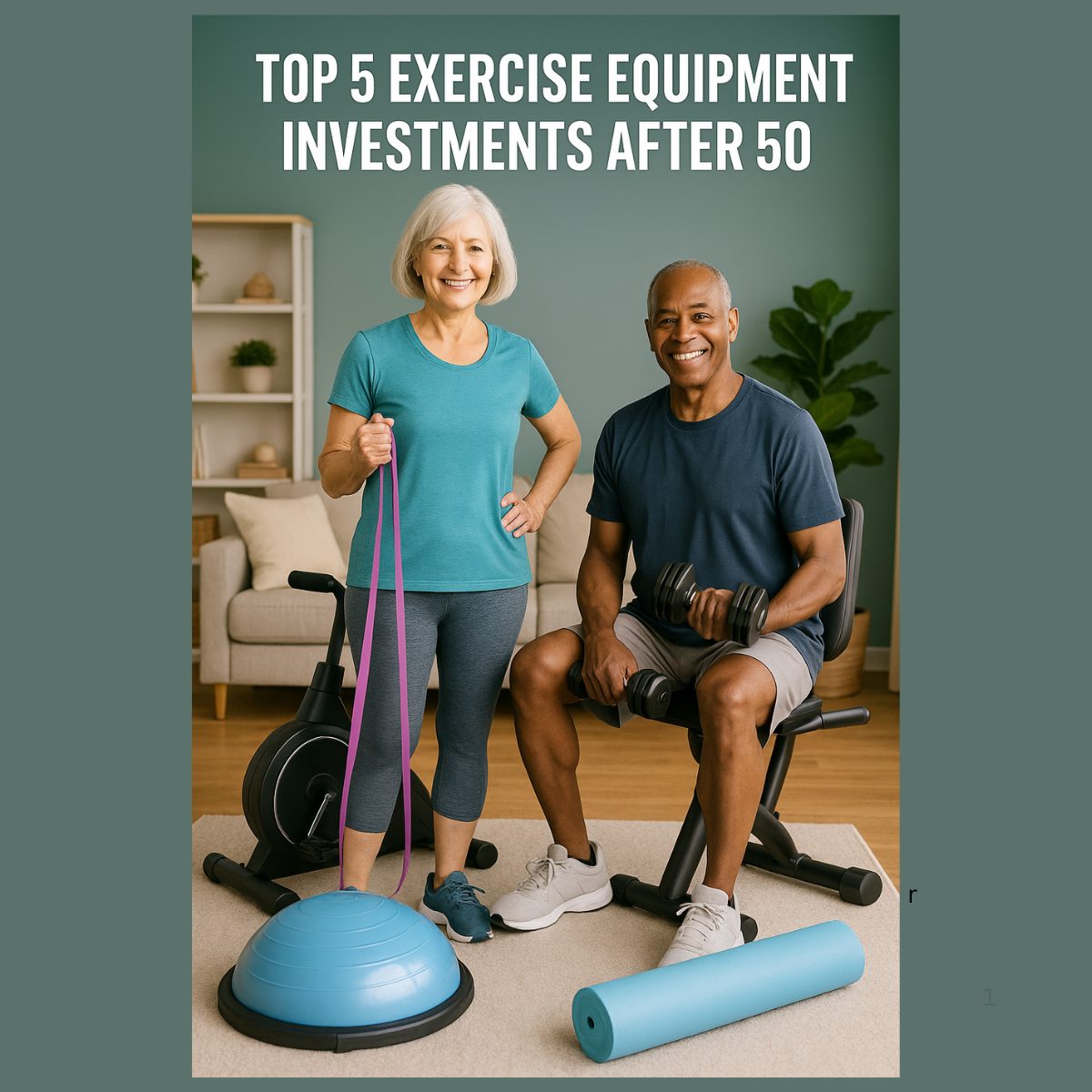
As we cross the milestone of 50, regular physical activity becomes crucial for our health and wellbeing. Our bodies have different needs now. The fitness equipment that worked in our younger years might not be ideal anymore.
The right equipment can be the difference between a sustainable fitness routine and one that’s abandoned—or leads to injury. Let’s explore the top five exercise tools perfect for adults over 50. These have been selected for their effectiveness. They are also joint-friendly, versatile, and offer great value.
Resistance Bands: The Versatile Foundation of Senior Fitness

When it comes to low-impact strength training for older adults, resistance bands are incredibly valuable. They might be the single best investment you can make. These unassuming rubber bands pack a powerful fitness punch without the joint stress of traditional weights.
Why resistance bands are ideal after 50:
- Joint-friendly resistance: Unlike weights that rely on gravity, bands create resistance through elasticity. This reduces impact on aging joints. They still effectively build muscle.
- Adaptable resistance levels: Most quality sets come with multiple resistance levels, allowing you to progress gradually as you build strength.
- Versatility: A good set of bands can target virtually every muscle group in your body.
- Portability: Weighing just ounces and taking minimal space, bands can travel anywhere—making consistency possible even during trips.
- Cost-effectiveness: For $20-40, you can get a comprehensive set that replaces thousands of dollars of gym equipment.
Margaret, 67, suffered from osteoarthritis that made traditional weightlifting painful. After switching to resistance bands on her physical therapist’s recommendation, she regained arm and shoulder strength without the joint pain. “I can now easily lift my grandchildren again,” she reports. “The bands let me strengthen the exact areas I need without aggravating my condition.”
Dr. Jennifer Liu, a geriatric specialist at Coastal Senior Health Center, recommends resistance bands to nearly all her patients over 50. “They provide progressive resistance with minimal joint stress—exactly what we want for maintaining functional strength throughout aging,” she explains.
What to look for when purchasing: Look for sets that include multiple resistance levels. Make sure they have comfortable handles. They should also include door anchors and a carrying case. Brands like TheraBand, Bodylastics, and Whatafit offer quality options with these features.
Recumbent Exercise Bike: Cardio Without the Strain

For joint-friendly cardio equipment for seniors, the recumbent bike emerges as the gold standard. Unlike upright bikes or treadmills, recumbent bikes allow users to exercise from a semi-reclined position with excellent back support.
Why recumbent bikes excel for the 50+ demographic:
- Reduced stress on knees, hips, and back: The reclined seated position distributes weight more evenly and eliminates impact.
- Improved stability and safety: The lower center of gravity and supportive seat virtually eliminate fall risk.
- Cardiovascular benefits: Despite being easier on joints, recumbent bikes provide excellent aerobic workouts that strengthen your heart and lungs.
- Entertainment compatibility: Most models allow you to comfortably read, watch TV, or use tablets while exercising, making longer sessions enjoyable.
According to the American College of Sports Medicine, adults over 50 should aim for 150 minutes of moderate aerobic activity weekly. A recumbent bike makes this accessible. It is suitable even for those with mobility issues or balance concerns.
Robert, 72, a retired teacher with knee replacement surgery, found that walking for exercise became increasingly painful despite physical therapy. “My recumbent bike gave me back my cardio routine,” he shares. “I ride 30 minutes daily while watching the news, and my heart health numbers have improved dramatically without any knee pain.”
What to look for when purchasing: Priority features should include a step-through design for easy mounting. Ensure there is adequate back support. The display metrics should be clearly visible. Look for adjustable resistance levels.
Adjustable Dumbbells: Space-Efficient Strength Training

When considering home gym equipment for older adults, adjustable dumbbells offer tremendous value. They combine multiple weights in a single compact system. This setup is perfect for maintaining muscle mass without dedicating an entire room to fitness equipment.
Benefits of adjustable dumbbells after 50:
- Space efficiency: A single pair replaces 5-15 pairs of traditional dumbbells.
- Progressive training: As you gain strength, you can increase weight without purchasing additional equipment.
- Functional strength development: Dumbbells allow natural movement patterns that translate directly to daily activities like carrying groceries or lifting objects.
- Balance improvement: Unlike machines, free weights engage stabilizing muscles that help prevent falls.
Research from the National Institute on Aging shows that resistance training twice weekly can reverse age-related muscle loss. It also improves bone density and enhances metabolic health. These are all crucial benefits for adults over 50.
What to look for when purchasing: Search for models with easy weight-changing mechanisms. Ensure they have comfortable grips. Also, check for flat bottoms for stable storage. Well-regarded systems include Bowflex SelectTech, PowerBlock, and NordicTrack Select-A-Weight, typically ranging from $300-500 depending on weight range.
Balance Trainer/Stability Ball: Core Strength and Fall Prevention

Falls represent one of the greatest health risks for adults over 50. The CDC reports that one in four older adults falls each year. A balance trainer (half-ball with a flat platform) or stability ball addresses this risk. It strengthens core muscles and improves proprioception—your body’s awareness of its position in space.
Why balance trainers are essential after 50:
- Fall prevention: Regular use improves balance and coordination that directly translates to steadier movement in daily life.
- Core strengthening: These tools engage deep stabilizing muscles often neglected in traditional workouts.
- Versatility: They can be used for dozens of exercises targeting various muscle groups.
- Progressive challenge: You can gradually increase difficulty as your balance improves.
- Posture improvement: Stronger core muscles help maintain better alignment, potentially reducing back pain.
The American Physical Therapy Association notes that balance training is especially beneficial for adults 50+. It directly counteracts age-related declines in proprioception. It also improves reaction time.
Dr. Michael Stevenson, a sports medicine physician specializing in active aging, explains: “Balance training isn’t optional after 50—it’s essential. Just 10 minutes daily on a balance trainer can dramatically reduce fall risk. It also strengthens core muscles that support every movement we make.”
What to look for when purchasing: For balance trainers, models like the BOSU Balance Trainer offer excellent versatility. If choosing a stability ball, ensure it’s burst-resistant and properly sized for your height.
Foam Roller: The Recovery Essential

Recovery becomes increasingly important as we age, with muscles typically requiring more time to repair after exercise. A high-quality foam roller represents one of the most cost-effective tools for enhancing recovery and maintaining mobility.
Benefits of foam rolling after 50:
- Myofascial release: Helps break up adhesions and knots in muscle tissue.
- Improved circulation: Enhances blood flow to muscles, potentially speeding recovery.
- Increased range of motion: Regular use can help maintain or improve flexibility.
- Pain reduction: May help alleviate common age-related discomforts like back tightness.
- Massage alternative: Provides similar benefits to massage therapy at a fraction of the cost.
A study published in the International Journal of Sports Physical Therapy found that foam rolling for just 2 minutes per muscle group significantly improved range of motion. This improvement was significant. It did this without decreasing muscle performance. These are valuable benefits for maintaining functionality as we age.
What to look for when purchasing: For beginners or those with significant muscle sensitivity, start with a softer roller. As you progress, firmer options provide more intense pressure.
Building Your Perfect Home Fitness Setup: The Smart Approach

When investing in fitness equipment after 50, consider these practical tips:
- Start with one piece at a time: Begin with the equipment that addresses your most immediate fitness need.
- Prioritize quality over quantity: A few well-made pieces will serve you better than multiple cheaper options.
- Consider space limitations: Measure your available exercise area before purchasing.
- Focus on versatility: Choose equipment that can be used for multiple exercises or fitness goals.
Common questions about exercise equipment after 50:
- Is expensive equipment necessary for results after 50? Not at all. Some of the most effective equipment (like resistance bands) is also the most affordable. Quality matters more than price point.
- How can I ensure I’ll actually use the equipment I purchase? Choose equipment that addresses activities you already enjoy, start with equipment that’s easy to use, and place it in a visible location in your home as a visual reminder.
- Should I consult a physician before purchasing exercise equipment? Yes, especially if you have existing health conditions. A doctor or physical therapist can provide guidance on the most appropriate equipment for your specific needs.
Conclusion: Invest in Your Long-Term Health
The exercise equipment you choose is an investment in your health, independence, and quality of life for years ahead. Equipment that meets your body’s needs after 50 sets you up for sustainable success.
Remember, consistency matters more than intensity. The best equipment is simply what you’ll use regularly. Start with one or two pieces that match your goals, build an enjoyable routine, and grow your home gym gradually.
Why not begin with resistance bands? They’re versatile, affordable, and the perfect foundation as you discover which exercises bring you the most joy and benefit.
Disclaimer: While we strive to provide accurate information, this article is not a substitute for professional medical advice. Always consult with your healthcare provider before beginning any new exercise program or purchasing fitness equipment, especially if you have existing health conditions or concerns.


Leave a Reply